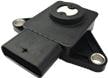
PS4-H2-50K

Amphenol SGX Sensortech
523-PS4-H2-50K
PS4-H2-50K

Mfr.:

Description:
Air Quality Sensors PS4 Series Solid Polymer Gas Sensor Hydrogen 50Kppm

Lifecycle:
New Product:
New from this manufacturer.
ECAD Model:
Download the free Library Loader to convert this file for your ECAD Tool. Learn more about the ECAD Model.

In Stock: 1

Stock:
1 Can Dispatch Immediately
Factory Lead Time:
9 Weeks Estimated factory production time for quantities greater than shown.
Minimum: 1   Multiples: 1
Unit Price:
€-.--
Ext. Price:
€-.--
Est. Tariff:
This Product Ships FREE

Pricing (EUR)

Qty. Unit Price
Ext. Price
€217.55 €217.55
€183.56 €917.80
€170.58 €1,705.80
€156.38 €3,909.50
€154.38 €7,719.00

Product Attribute Attribute Value Select Attribute
Amphenol
Product Category: Air Quality Sensors
RoHS:  
Solid Polymer 4-series
Hydrogen
0 PPM
50000 PPM
Analog
PS4 Series
Brand: Amphenol SGX Sensortech
Product Type: Air Quality Sensors
Factory Pack Quantity: 1
Subcategory: Sensors
Products found:
To show similar products, select at least one checkbox
Select at least one checkbox above to show similar products in this category.
Attributes selected: 0

CAHTS:
9027100010
USHTS:
9027102000
JPHTS:
902710000
KRHTS:
9027100000
MXHTS:
9027100100
BRHTS:
90271000
ECCN:
EAR99

Solid Polymer Electrochemical Gas Sensors

Amphenol SGX Sensortech Solid Polymer Electrochemical Gas Sensors are designed to detect a wide range of gases, including carbon monoxide, chlorine, and volatile organic compounds (VOCs), as well as humidity and particulates. These sensors are based on the principle of electrochemical catalytic reaction. The sensor responds to the target gas and delivers a very small current proportional to the gas concentration. The series utilizes a dry core design featuring three electrodes in contact with the solid electrochemical material. A typical electrode consists of a surface area of precious metal and other materials. The electrode, electrochemical cell, and surrounding air are in contact, allowing the gas to diffuse through the porous membrane into the sensor's working electrode. At this working electrode, the gas is oxidized or reduced.